Live Storm Radar & Hail Reports
Everything on this page comes straight from the National Weather Service — the Omaha/Valley radar, GOES satellite, active warnings, and the hail and wind reports spotters actually called in. If a storm crossed your neighborhood, this is how you find out how big the hail was.
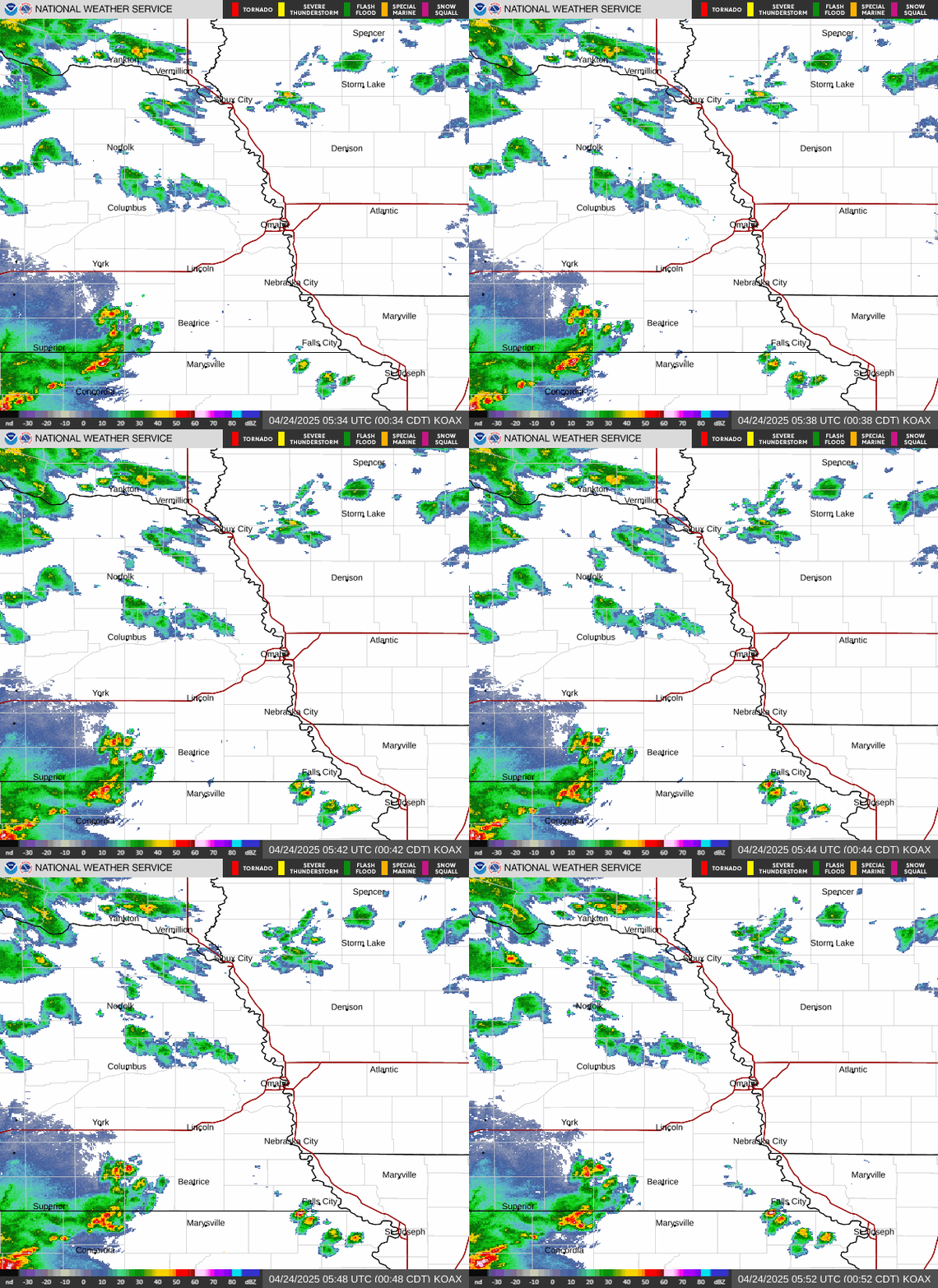
Radar covers roughly 150 miles around Omaha — our whole service area sits inside it.
Where it hit
Every hail and wind report the National Weather Service logged near us in the last 3 days, plotted at the exact coordinates the spotter gave. Circle size is hail size. Rings are 30, 60 and 90 miles from our Waterloo shop.
Active warnings
Everything in effect right now for eastern Nebraska and western Iowa.
Checking the National Weather Service…
Confirmed hail & wind
Storm reports called in near us over the last 3 days. Hail at 1 inch and up is marked — that is the size that bruises shingles.
Loading storm reports…
See hail near your address? Damage often looks like nothing from the ground and still costs you the roof. We inspect it, photograph it, and write it up for your insurance claim — free, and with no obligation.
Request an inspectionEastern Nebraska hail: what homeowners should know
Eastern Nebraska regularly experiences severe thunderstorms that can bring hail, damaging wind, heavy rain, and frequent lightning. The live panels above show current warnings and recent preliminary National Weather Service reports. Those reports can help establish where a storm traveled, but they do not prove that every property in the area was damaged.
What different hail sizes can do
- About 1 inch: asphalt-shingle damage can begin, especially on older or weathered roofing.
- About 1.75 inches: golf-ball-size hail can leave dents, bruises, and cracks.
- 2 inches or larger: impacts can crack or break shingles and damage vents, flashing, gutters, and siding.
Roof damage is often difficult or impossible to confirm from the ground. Do not climb onto a wet or storm-damaged roof.
What to do after a storm
- Follow official warnings and stay away from fallen lines, unstable trees, and damaged structures.
- From the ground, photograph dents in gutters or downspouts, damaged screens, bent air-conditioner fins, and marks on wood.
- Check ceilings and attic areas for active water entry, without entering an unsafe space.
- Contact your insurer if there is active damage and confirm the deadlines and duties in your own policy.
- Request a professional roof inspection before assuming that a claim or replacement is necessary.